Candidates rebuilding after an unsuccessful SAFE MLO attempt
Failed the NMLS Exam? 30-Day Retake Study Plan
A 30-day NMLS retake study plan for candidates who failed the SAFE MLO exam and need a focused rebuild around score reports, weak areas, and wording traps.
By SafeMLO Coach Editorial Team. Reviewed against official NMLS, CSBS, CFPB, and Prometric materials. Updated June 26, 2026.
Direct answer
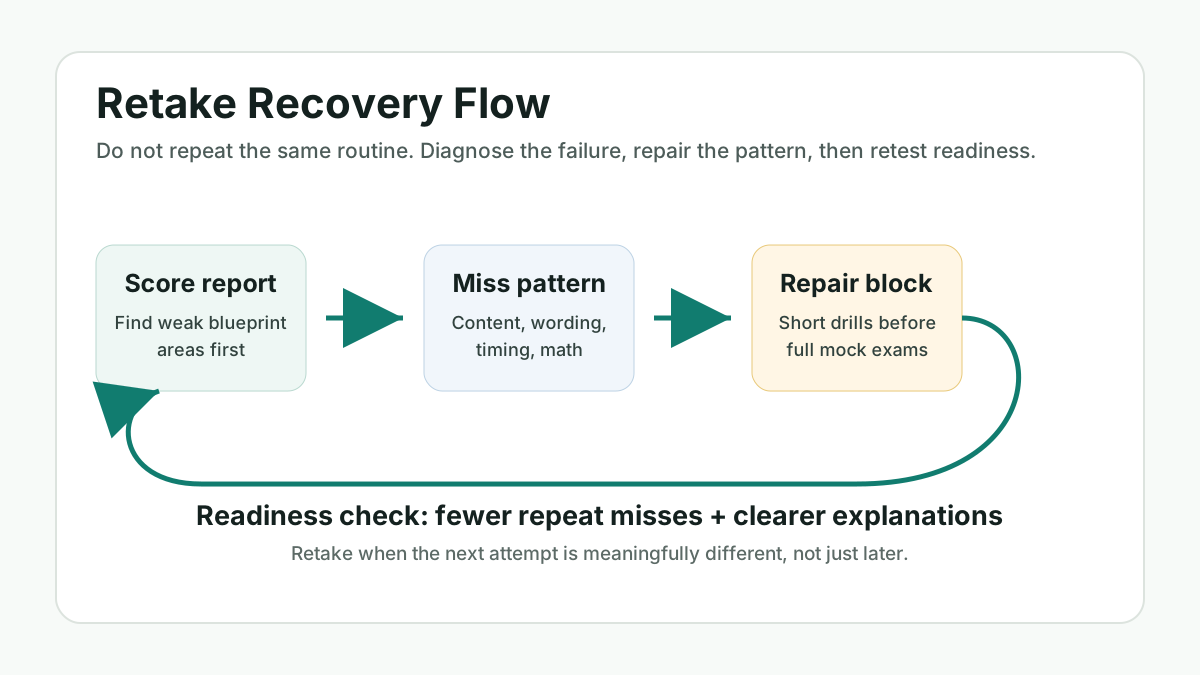
After failing the NMLS exam, the worst move is to simply do the same course again with more pressure. Start with the score report, identify the two weakest blueprint areas, tag the reason you missed questions, and rebuild with focused drills before you take another full mock.
Failing the NMLS exam is frustrating, but the second attempt should not be the first attempt with a louder countdown. A good retake plan has to answer a more useful question: what kind of mistake kept costing points?
Before scheduling a retake, confirm current waiting-period rules and testing requirements with NMLS. Then rebuild your plan around weak blueprint areas and repeated mistake patterns.
Decision guide
| Situation | Best move | Why it matters |
|---|---|---|
| Your score report shows one very weak area | Repair that area before returning to full exams | A full mock can hide the problem by mixing in easier areas; short topic sets show whether the weak area is actually improving. |
| You were close but missed many questions you felt sure about | Build a separate high-confidence miss list | These are not ordinary gaps. They show where your instinct is confidently choosing the wrong rule. |
| You ran out of time or rushed | Use timed mixed sets only after focused review improves accuracy | Timing practice helps only after the underlying rule recognition is cleaner. |
Week 1: Tear down the score report and old habits
Start with your score report and your memory of test-day mistakes. Sort weak areas by blueprint category, then sort misses by mistake type: content gap, wording trap, timing confusion, math error, or fatigue.
Do not immediately take another full mock. If the same habits are still present, another mock mostly gives you a new number attached to the old problem.
Write a short retake rule for yourself: every wrong answer must produce one sentence explaining the tested rule and one sentence explaining why the tempting answer failed.
Week 2: Repair your two weakest blueprint areas
Choose two areas to repair first. For many candidates, these are federal law and mortgage loan origination activities, but your score report should drive the choice.
Use topic blocks of 15 to 25 questions, then review slowly. Do not move to the next block until you can explain your missed answers without looking at the explanation. If you can only understand the explanation after reading it, the rule is still not yours.
If you missed ethics questions, practice identifying the safest compliant action. If you missed law questions, practice identifying the rule before reading the answer choices.
Week 3: Mix practice and rebuild stamina
Once weak areas are repaired, bring back mixed practice. Mixed sets reveal whether you can recognize the topic without being told what you are studying.
Add timing gradually. Rushing too early can hide whether you truly understand the rule.
Track high-confidence misses carefully. Those are the questions most likely to repeat as test-day traps because they feel familiar. The goal is not to distrust yourself; it is to make sure confidence is attached to the actual wording.
Week 4: Final retake readiness check
In the final week, use one readiness set and then review missed questions harder than correct ones. A score without review is not a study session.
Create a retake sheet with your top federal law timing rules, mortgage math formulas, UST duties, ethics boundaries, and origination workflow reminders.
The goal is not perfection. The goal is fewer repeat mistakes, calmer reading, and stronger rule recognition under pressure.
Common mistakes to avoid
- Taking another full practice test immediately after failing: Use the next few sessions to repair one miss pattern at a time, then use a readiness test to confirm the repair.
- Blaming the exam only on nerves: Separate nerves from content gaps, timing confusion, math setup, and wording traps.
- Reviewing only the correct answer: Explain why your answer failed under the exact wording. This is where retake gains usually come from.
Study checklist
- Use the score report to choose weak areas.
- Do not retake full mocks without reviewing every miss.
- Track high-confidence wrong answers separately.
- Write why each tempting answer is wrong.
- Confirm official retake timing with NMLS before scheduling.
Related practice topics
What should I do first after failing the NMLS exam?
Review your score report, identify weak blueprint areas, and tag your mistakes by cause. Then rebuild your study plan around those causes instead of simply repeating the same materials.
How long should I study before retaking the NMLS exam?
The right timeline depends on your score, weak areas, and official waiting-period rules. Many candidates benefit from a focused 30-day rebuild, but you should confirm current retake rules with NMLS.
Next action
Build a retake log with three columns: tested rule, why my answer failed, and the decision rule I will use next time.
Sources used to verify this page
SafeMLO Coach is an independent study aid. It is not NMLS, CSBS, Prometric, a state regulator, a lender, a school, or a law firm. Always confirm licensing, renewal, testing, fees, waiting periods, and continuing education requirements with official sources.
- NMLS: Preparing for the SAFE MLO Test - NMLS guidance on using the official content outline and keeping current with legislative changes.
- NMLS: Retaking a Failed Test / Waiting Period - Official retake and waiting-period guidance for candidates who did not pass.
- CFPB: Rules Governing Loan Origination Practices - CFPB resources for loan originator compensation and origination practice rules.
- NMLS: SAFE MLO National Test with Uniform State Test Content Outline - Primary outline for the national SAFE MLO exam content areas and reference list.
Editorial notes and trust
SafeMLO Coach is an independent study aid. It is not NMLS, CSBS, Prometric, a state regulator, a lender, a school, or a law firm. Always confirm licensing, renewal, testing, fees, waiting periods, and continuing education requirements with official sources.